
How Acoustic Liquid Handling Works: Acoustic Droplet Ejection and Other Technologies
Published: oktober 27, 2026
Summary
This feature story describes the physics of how sound waves, traveling through both liquids and solids, can be concentrated near a liquid surface (the air-liquid interface) to create precise droplets and accurate fluid aliquots. Combining acoustics and the hydrodynamics of drop formation with sensing technologies enables robust liquid handling instruments to “move liquids with sound” by controlling the focused acoustic energy delivered to the fluid surfaces.
Scientists first described the ability of ultrasound waves to lift and propel ultra-small droplets from liquid surfaces in the 1920s.1 In the early 21st century, Labcyte—now part of Beckman Coulter—turned this physical phenomenon into a practical, controllable technology known as Acoustic Droplet Ejection and introduced Echo Acoustic Liquid Handlers.
Labcyte later developed Dynamic Fluid Analysis Tools to further improve ADE performance, supporting more accurate and precise acoustic liquid handling across a broader range of applications.
The new Echo 650 Plus Series builds on this foundation with two key innovations: Dynamic Fluid Analysis 2 (DFA2) and the Next Generation Transducer. Together, they further enhance acoustic liquid handling performance. This page explains how these technologies work and why they matter.
What is Acoustic Droplet Ejection (ADE)?
Acoustic Droplet Ejection (ADE) uses focused acoustic energy to eject nanoliter-scale droplets from a liquid surface and transfer them to a destination plate without physical contact.
How does ADE work?
- A transducer sits beneath the source plate and focuses acoustic energy into a specific well.
- Ultrapure water, or coupling fluid, flows between the transducer and the source plate bottom to enable efficient transmission of sound waves.
Prior to ejection:
A survey or audit is conducted. Time-of-flight and amplitude using sub-ejection soundwave pulses, or pings, are used to infer:
- Bottom of the plate / bottom of well bottom (BB)
- Bottom of the well / top of well bottom (TB)
- Surface reflection at the meniscus (air-liquid interface) (SR)
The instrument uses these survey results to begin optimizing fluid transfer parameters. Customers can also collect this data to monitor well-fluid properties. Surveys may be run repeatedly as a standalone action on an instrument or on an Access Workstation, SRS, or DRS using sealed plates before executing large library transfers.
During ejection:
- Acoustic energy forms a liquid mound at the surface of the liquid in the well.
- When a threshold is reached, a controlled droplet is ejected into an inverted destination plate.
Why this matters
- Enables precise, contact-free transfers.
- Reduces contamination risk.
- Supports high-throughput workflows.
Typical droplet ejection rates and transfer volumes
- Up to 700 drops/s, calibration-specific
- Echo 525 instruments: 25 nL increments
- Echo 650 Plus series instruments: 2.5 nL increments
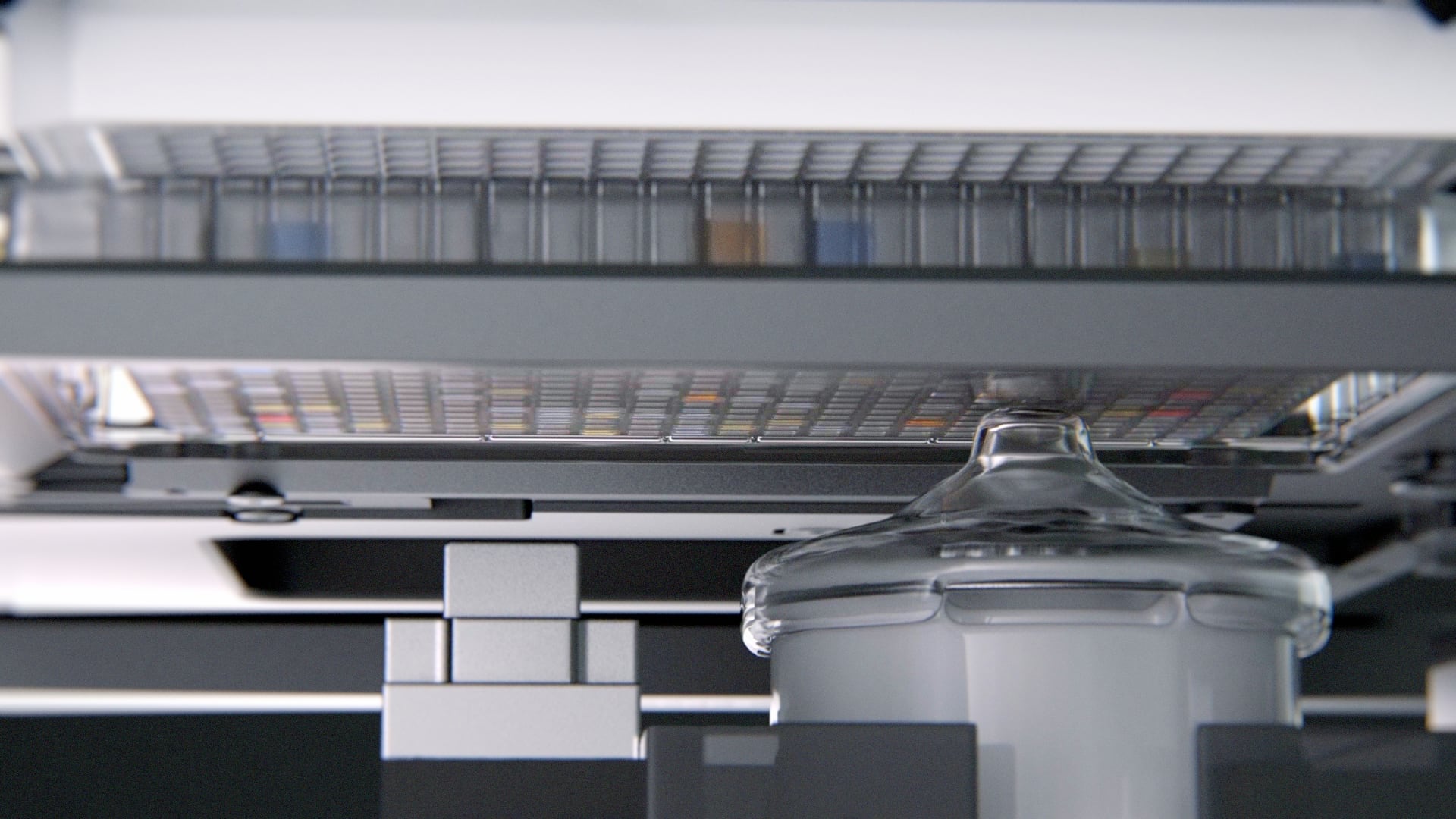
Figure 1: Interior illustration of an Echo acoustic liquid handler during transfer. In this image, a Next Generation Transducer (NGT) is positioned directly under a specific source well. The inverted assay well (target) is positioned directly above the source plate.
Why are precision and accuracy challenging in acoustic liquid handling?
Precision and accuracy are not challenging only for acoustic liquid handling; most liquid handling technologies require a number of input variables to be accounted for to produce precise volumes. However, when it comes to truly contactless nanoliter-scale transfers found in acoustic droplet ejection, the correct level of energy is critical:
- Too little energy: droplets may not reach the destination.
- Too much energy: satellite droplets can form.
This “just-right” balance is critical to achieving precise, reproducible transfers.
Enabled by advanced sensing and machine learning tools—such as Dynamic Fluid Analysis (DFA) and the Next Generation Transducer (NGT) in the Echo 650 Plus Series—Echo Acoustic Liquid Handlers deliver highly precise nanoliter-scale drops.
What is Dynamic Fluid Analysis (DFA)*?
Dynamic Fluid Analysis (DFA) is a sensing technology that measures how a liquid responds to ultrasound before ejection—without ejecting a droplet.
How does DFA improve performance?
- Makes well-specific runtime adjustments.
- Predicts optimal acoustic energy.
Key benefits of DFA
- No pre-calibration required – the Echo Acoustic Liquid Handler determines transfer parameters for each well-based sample or reagent at runtime
- Enables reliable transfer of diverse liquid types at variable well fill volumes. For example: one well in a 384PP Echo source plate can contain 25 µL of 25% glycerol; the adjacent well can contain 50 µL of 50% glycerol. Using the 384PP_AQ_GP3 calibration on the Echo 650 Plus instrument, those nanoliter-scale dispenses will be <8% precise and <10% accurate.
- Minimizes the impact caused by reagent changes that may occur over time, such as hydration of DMSO samples, which occurs non-uniformly in microplates and happens rapidly in ambient environments
- Ability to transfer a broader range of liquids
- No additional steps required to dispense complex fluid sets or inconsistent reagents from a single plate
- Improved downstream data quality
DFA provides several benefits:
- No need to calibrate the instrument in advance — the Echo Acoustic Liquid Handler determines transfer parameters for each well-based sample or reagent at runtime
- Survey reports are generated before and after instrument transfers.
- Less time is required to maintain and operate the instrument
- Ability to transfer a broader range of liquids
- No additional steps required to dispense complex fluid sets or inconsistent reagents from a single plate
- More consistent and accurate downstream data
What is Dynamic Fluid Analysis 2 (DFA2)*?
DFA2, available on the Echo 650 Plus Series, enhances DFA using machine learning and includes:
Dynamic Plastic Analysis (DPA)
- Accounts for variability in polypropylene plates.
- Ensures consistent performance across plate lots.
Dynamic Mound Analysis (DMA)*
- Uses sub-ejection pulses to probe liquid behavior and automatically select a sub-calibration more specific to the fluid configuration.
- Improves performance for complex fluids.
*plate- and calibration-dependent
What is the Next Generation Transducer (NGT)?
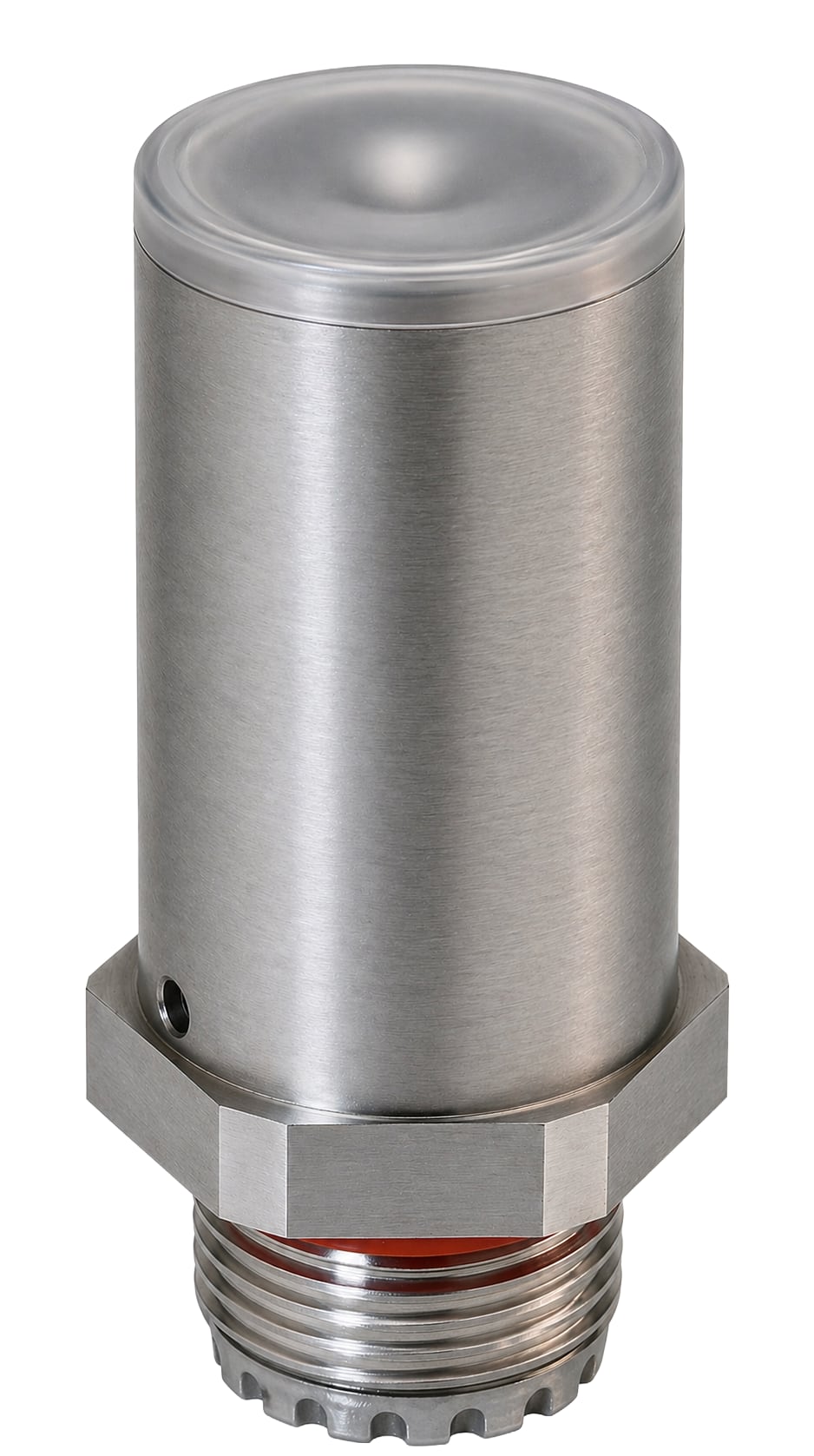
The transducer is the core component of an acoustic liquid handling system. It focuses acoustic energy into the source well, so its performance, stability, and reliability directly affect transfer consistency.
The Next Generation Transducer (NGT) is used in Echo 650 Plus Series instruments and the Echo MS+ system sold by SCIEX. It includes manufacturing and material enhancements designed to improve acoustic droplet ejection performance, manufacturing robustness, and system stability.
Key improvements
- Titanium-based lens that resists dry-out as well as water intrusion.
- Increased system stability.
- Improved manufacturability.
Operational benefits
- Power down for 14+ days
- Restart without a service call after stabilization
- Reduce power consumption by more than 50% in conjunction with the Echo Core electronics updates released in the Echo 650 Plus Series: from 550 W on a legacy Echo instrument to approximately 260 W
*plate- and calibration-dependent
FAQs about Acoustic Droplet Ejection
What is the coupling fluid in an Acoustic Droplet Ejection system?
In Echo Acoustic Liquid Handlers, the coupling fluid is ultrapure water. It acoustically couples the transducer lens to the bottom of the microplate, allowing sound waves to transmit efficiently through the plate and liquid—much more effectively than they would through air.
How accurate are acoustic survey measurements on an Echo instrument?
Echo instruments use time-of-flight (TOF) analysis to perform acoustic surveys. The instrument sends sound waves through the plate and liquid, then measures their reflections with sub-microsecond-scale precision. Because the measurement is taken from the center of the liquid meniscus, fluids with meniscus behavior that differs from the manufacturing standards may produce slightly different measurements. For this reason, survey-based volumes are best used for relative checks—such as confirming that a well contains enough fluid for transfer—or for monitoring libraries over time, rather than for absolute volume benchmarking, such as evaluating pipettor performance.
Why is a chiller required in the fluidics circuit?
The coupling fluid on an Echo instrument is kept at a constant temperature—22°C—to keep the speed of sound constant.
Can wells of the destination plate be pre-filled with assay components, e.g., live cells in a microtiter plate?
Yes, ADE enables liquid transfer to either dry or pre-filled wells. Customers are advised to pre-test the assay volume of the pre-filled plate by testing the fluid volume in an inverted plate to ensure surface tension holds the fluid in the well.
How is a destination microplate inverted and maintained in the upside-down orientation?
The inversion mechanism and a destination plate holder are integrated into the Echo Acoustic Liquid Handlers. The destination plate is inverted by rotating it 180 degrees before it enters the instrument for the transfer process. After the transfer is complete, the plate is ejected in the inverted orientation and then rotated back to its original, upright position.
Do the droplets reaching the inverted destination plate splash?
Echo instruments are engineered to capture nanoliter-scale droplets. Our engineered calibrations enable samples to be dispensed with sufficient velocity to be captured by the assay or destination plate. Furthermore, a high-voltage grid enhances coalescence through electrostatic interactions.4
Which destination plates are compatible with Echo instruments?
Echo instruments can use standard microplates that are ANSI/SLAS-compliant and are under 16 mm in height. Additionally, labware such as microscope slides can be used with an Echo instrument provided that a labware holder is used.
Example assay labware used successfully with Echo instruments includes, but is not limited to:
- Standard skirted 96, 384, 1536-well microplates from major vendors
- Skirted 384-well PCR/qPCR microplates
- Microscope slides held with a 3D-printed holder
- HTS MALDI plates held with a 3D-printed holder
- Single-well laboratory plates filled with growth media, such as those used in biopointillism work
How much fluid can an inverted assay plate hold and still be compatible with acoustic transfers?
Our customers routinely use Echo instruments to transfer to assay or destination plates containing fluids, such as experiments using cells already in culture. These are rules of thumb, and we recommend reaching out to our Field Applications team for assay-specific guidance, but in general:
- 1536-well plates: typical fluid-assay volumes of 1–8 µL are fully supported.
- 384-well plates: volumes up to 30 µL are supported, but it is important to pre-test using the planned assay plate, because specific plastic treatments, such as those used for cell culture, can affect surface tension on the plate. We have reports from customers using higher volumes, but it would be good to check with a Beckman Coulter Life Sciences specialist to ensure assay compatibility.
- 96-well plates: compatibility can vary significantly depending on assay plate plastic, surface material, and the fluid to be transferred, but as a rule of thumb, 10 µL can be supported. Again, we have pharma customers who have reported higher volumes, but we would like to better understand the workflow to ensure compatibility. Other formats, such as 12-well, 6-well, and non-SBS formats: we can also dispense to compatible destination plates or labware with adapters that contain fluids, but it is important to empirically confirm workflow compatibility.
Is the acoustic liquid handling technology compatible with tubes?
Yes, the Echo 650T Plus and Echo 655T Plus Acoustic Liquid Handlers are compatible with Acoustic Sample Tubes from Azenta Life Sciences for use as a source consumable.
Does ADE damage living cells and fragile macromolecules?
No. Because ADE is contactless and uses relatively low acoustic energy for droplet ejection, it is generally gentle toward living cells and fragile macromolecules.2,3 Customers frequently use ADE to dispense live microorganisms, including bacteria and yeast, for high-throughput arraying. In biopointillism examples, such as those shown by Yeast Art, Echo instruments can create up to 25,000 arrays of 2.5 nL dispenses containing pigment-producing microorganisms.
Can the Echo 525 and Echo 650 Plus Series Liquid Handlers transfer liquid volumes larger than 25 nL and 2.5 nL?
Yes. Larger-volume transfers are accomplished by ejecting multiples of the transfer increments for each respective instrument.
Why do Echo 650 Plus instruments require Echo-qualified source plates if those instruments have the Dynamic Plastic Analysis tool?
Acoustic droplet ejection is highly sensitive to plastic properties that can affect acoustic impedance, and subsequently, transfer performance. Beckman Coulter Life Sciences takes great care in ensuring that plate manufacturing is scaled to meet expanding demand but is also carefully controlled to meet these exacting quality requirements. Dynamic Plastic Analysis (DPA), by using machine learning to capture new plastics-fluid properties, ensures that any necessary upstream changes to plastics manufacturing can be applied to the global instrument install base with minimal interruption to customers.
Which Echo plate calibrations use Dynamic Mound Analysis (DMA)?
Contact Beckman Coulter Life Sciences for the latest information on the use of DMA on plate calibrations in the Echo 650 Plus Series.
Can older Echo instruments be upgraded to use the NGT?
No. The NGT works together with the Core electronics, which include the updated RF circuitry used in Echo Plus instruments. Because the transducer and electronics are integrated as part of the instrument architecture, upgrading an older Echo system to use the NGT is not a practical retrofit.
References
- Wood RW and Loomis AL. "The Physical and Biological Effects of High Frequency Sound Waves of Great Intensity". Philosophical Magazine. 1927. 4 (22): 417–436.
- Ellson R et al. Transfer of Low Nanoliter Volumes between Microplates Using Focused Acoustics—Automation Considerations. SLAS Technology. Volume 8(5), 2003, 29-34. https://doi.org/10.1016/S1535-5535(03)00011-X
- Hadimioglu et al. Moving Liquids with Sound: The Physics of Acoustic Droplet Ejection for Robust Laboratory Automation in Life Sciences. Journal of Laboratory Automation;2016, Vol. 21(1) 4–18. DOI: 10.1177/2211068215615096.
- Sackmann EK et al. Technologies That Enable Accurate and Precise Nano- to Milliliter-Scale Liquid Dispensing of Aqueous Reagents Using Acoustic Droplet Ejection. SLAS TECHNOLOGY Translating Life Sciences Innovation; 2015. 21(1). DOI:10.1177/2211068215602191
- Olechno et al. Acoustic Droplet Ejection Technology. Innovations in Pharmaceutical Technology. 2019.

Talk to an Expert
Echo Acoustic Liquid Handlers
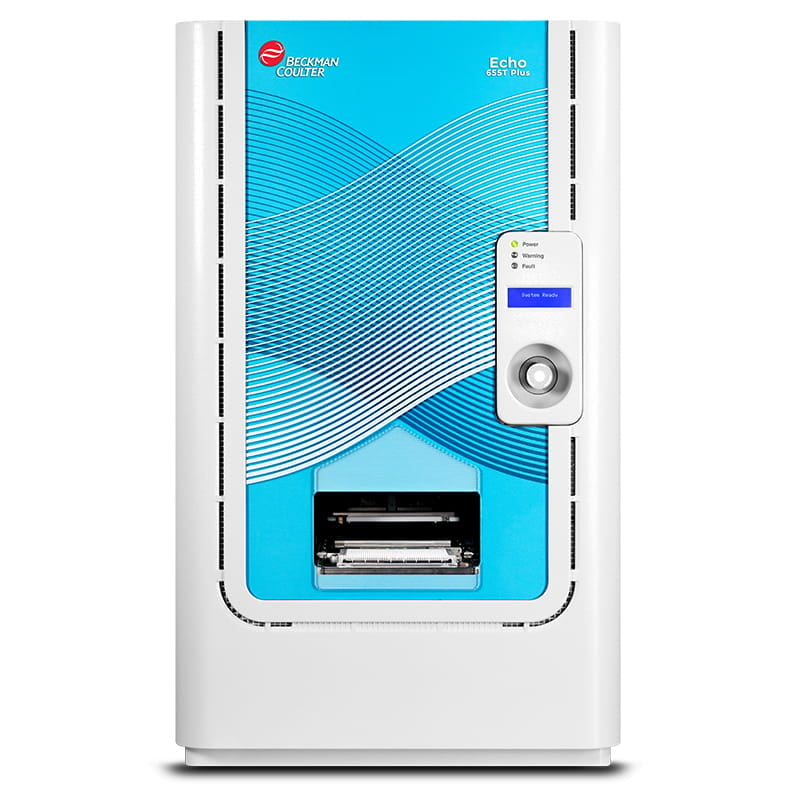
Echo 650 Plus Series Acoustic Liquid Handlers
High‑Throughput, Non‑Contact, Accurate, and Precise Liquid Dispensing with Volumes as Low as 2.5 nL

Echo Plate Reformat Software
Echo Plate Reformat software offers a variety of liquid transfer functions, including assay plate replication, library compression, & customization.

Echo Cherry Pick Software
Echo Cherry Pick software enables transfers of any volume of liquid from any source well into any destination well.

Echo Dose-Response Software
Echo Dose-Response software provides a simple step-wise process for designing assay plate layout and creating dose-response curves.


